
Attachment Styles
How Early Bonds Shape Us
Attachment theory reveals how our earliest relationships create the templates through which we experience all subsequent connections.
What Is Attachment Theory?
Attachment theory, developed by John Bowlby and expanded by Mary Ainsworth, describes the deep emotional bonds that form between infants and their caregivers. These early attachment relationships create internal working models — unconscious templates for how we expect relationships to work, how worthy of love we believe ourselves to be, and how safe the world feels. These patterns persist into adulthood, shaping our romantic relationships, friendships, and even our relationship with ourselves.
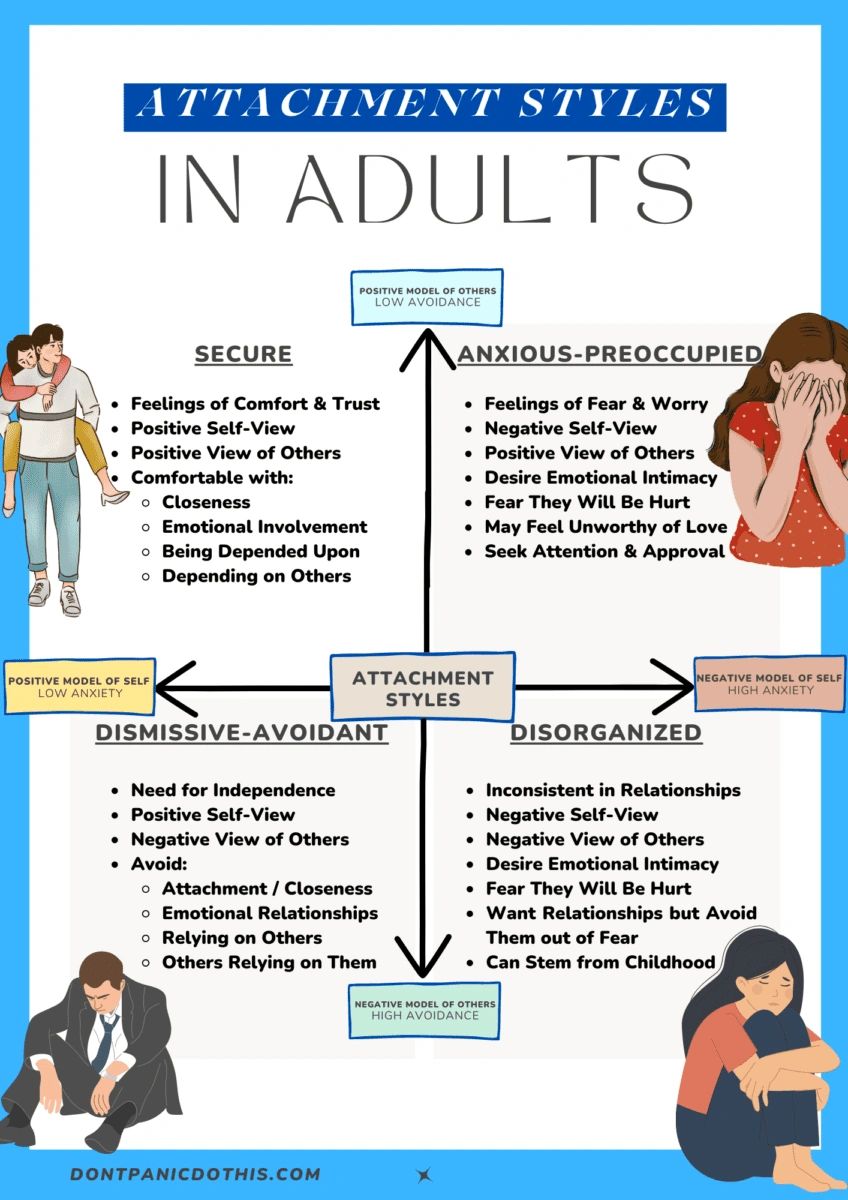
The Four Attachment Styles
Secure Attachment
Developed when caregivers are consistently responsive and attuned. Securely attached adults feel comfortable with intimacy and interdependence, can ask for help, and recover well from relationship stress.
Anxious Attachment
Develops when caregiving is inconsistent — sometimes responsive, sometimes not. Anxiously attached adults may worry about abandonment, seek reassurance frequently, and have difficulty trusting that relationships are stable.
Avoidant Attachment
Develops when caregivers are consistently emotionally unavailable or dismissive. Avoidantly attached adults may value independence highly, feel uncomfortable with closeness, and tend to suppress emotional needs.
Disorganized Attachment
Develops when caregivers are a source of both comfort and fear, often due to trauma or abuse. Disorganized attachment is associated with the most significant relational and emotional challenges in adulthood.
Healing Attachment Wounds
Attachment patterns are not fixed. Research shows that earned secure attachment is possible — through therapy, through healing relationships, and through developing a compassionate relationship with oneself. Neurofeedback, EMDR, somatic therapy, and compassion-based practices all support the healing of attachment wounds by working at the neurological level where these patterns are stored.
Attachment Styles in Adults
Understanding your attachment style can be profoundly illuminating. It helps explain patterns in your relationships that may have seemed mysterious or frustrating. With this understanding comes the possibility of change — not by forcing yourself to be different, but by gently working with the underlying neurological and emotional patterns that drive these behaviors.
Heal Your Attachment Patterns
Understanding and healing attachment wounds is some of the most transformative work available in therapy. Contact me to explore how this work can support you.
Contact Me