

Somatic Psychology
Healing Through the Body
Somatic psychology recognizes that trauma and stress are held not just in the mind, but in the body itself.
What Is Somatic Psychology?
Somatic psychology is a body-centered approach to therapy that integrates the physical body into the healing process. Unlike traditional talk therapy, somatic approaches work directly with bodily sensations, movement, and the nervous system to release stored trauma and restore balance. The word 'somatic' comes from the Greek 'soma,' meaning body. Somatic therapists believe that our bodies hold the memory of our experiences — including traumatic ones — and that healing requires addressing these physical patterns alongside cognitive and emotional processing.
Core Principles
Body Awareness
Learning to notice and track physical sensations, tension patterns, and the body's responses to stress and safety.
Nervous System Regulation
Developing the capacity to move between activation and calm, building resilience and flexibility in the nervous system.
Trauma Release
Gently working with the body's natural impulses to complete interrupted defensive responses and discharge stored stress.
Embodied Presence
Cultivating a felt sense of being at home in one's body, grounded in the present moment.
The Vagal Nerve and the Polyvagal Theory
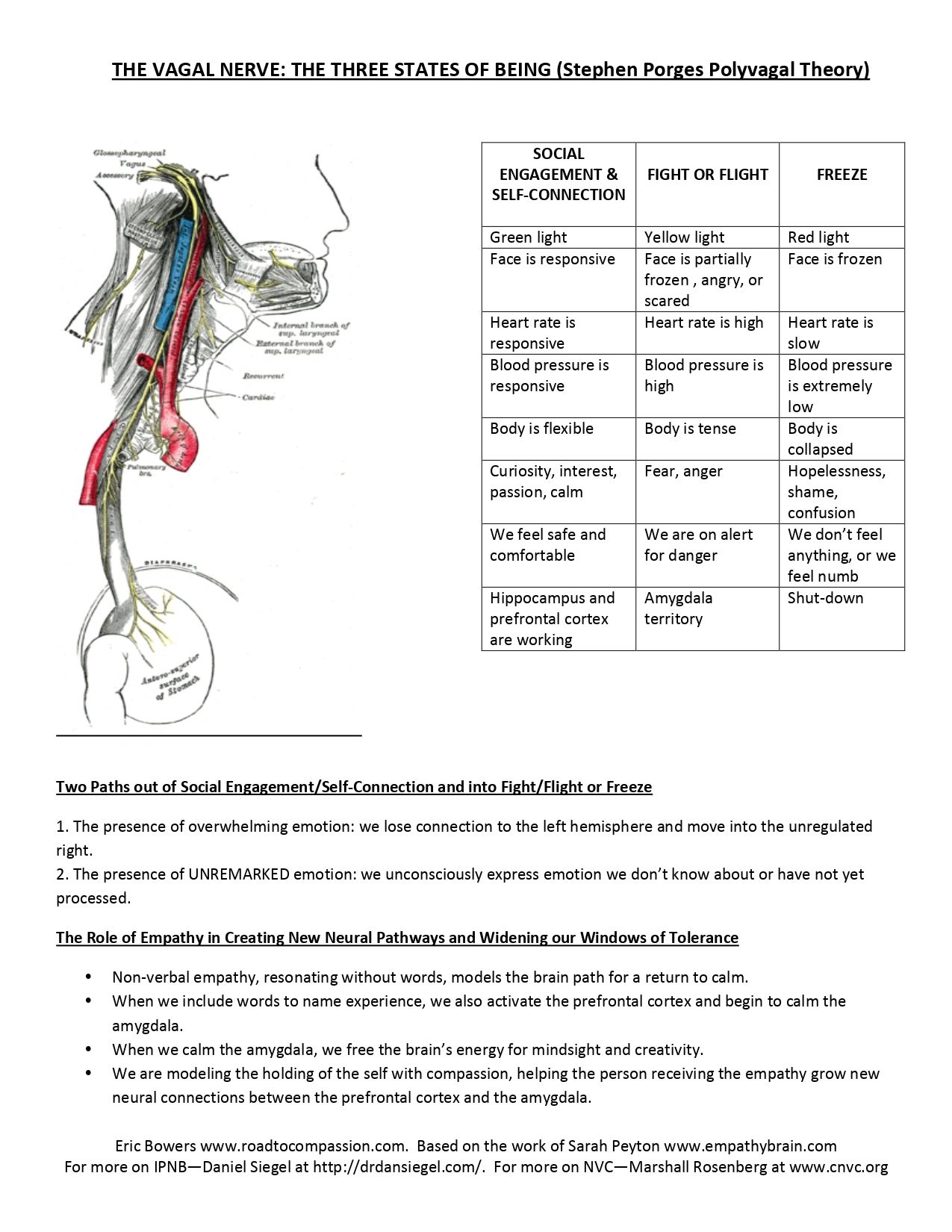
The vagus nerve is the longest cranial nerve in the body, connecting the brain to the heart, lungs, and digestive system. Dr. Stephen Porges' Polyvagal Theory explains how the vagus nerve regulates our social engagement system and our responses to threat. When we feel safe, the ventral vagal system supports connection and calm. Under threat, we shift to sympathetic activation (fight or flight) or dorsal vagal shutdown (freeze). Somatic therapy helps clients develop greater vagal tone and flexibility, supporting resilience and recovery from trauma.
The Window of Tolerance
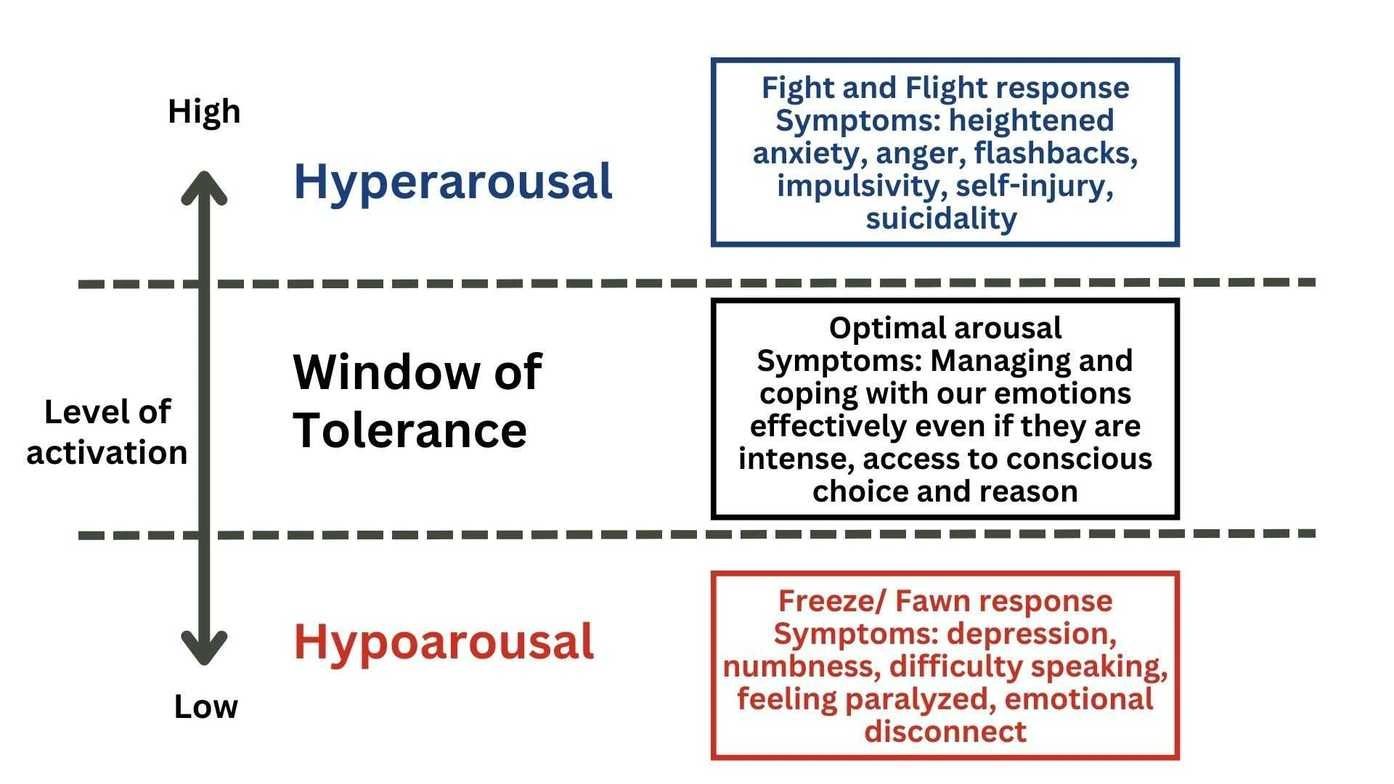
The Window of Tolerance describes the optimal zone of arousal in which we can function effectively — neither overwhelmed by hyperarousal (anxiety, panic, rage) nor shut down by hypoarousal (numbness, dissociation, depression). Trauma often narrows this window. Somatic therapy works to widen it, helping clients develop greater capacity to stay present with difficult experiences without becoming overwhelmed or shutting down.
Begin Your Somatic Healing Journey
Somatic psychology offers a path to healing that honors the wisdom of the body. Contact me to learn how somatic approaches can support your recovery.
Contact Me